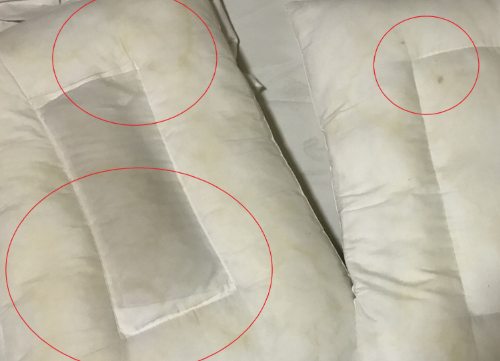
You make the bed, strip the sheets, and there they are. Not the stray crumbs or the odd gray smudge of everyday dust, but specific, telling marks. A faint yellowish tint on the crisp white cotton. A slightly stiff, salty patch where your cheek rested. A cluster of tiny, mysterious black specks. You might dismiss them as just “dirt” or “oil,” something to be bleached and washed away without a second thought.
But what if those stains are less about filth and more about forensics? They are the physical evidence of what happens to your body during its eight-hour journey of repair and restoration. Your pillowcase is the silent witness, the blank page upon which your skin, your hair, your eyes, and your breath write a nightly report.
Let’s decode this secret diary, page by page (or stain by stain).
The Yellowish Stain: The Elegy of Dead Skin & Oxidized Sweat
That buttery or pale yellow stain is the most common entry in the nightly log. It’s a complex cocktail, not simple dirt.
- Sebum & Skin Cells: Your skin is constantly renewing itself, shedding millions of dead cells every night. These cells mix with sebum—the oil your skin produces to stay waterproof and supple. Sebum, when exposed to air over hours, oxidizes and turns a yellowish hue.
- Sweat: Even if you don’t feel sweaty, you perspire slightly during sleep to regulate temperature. Sweat contains water, salts (like sodium chloride, which can leave a stiff patch), and tiny amounts of urea and ammonia. When concentrated on fabric, it dries into a yellowish map of your nighttime warmth.
- Hair Products: Conditioners, serums, and dyes slowly leach from your hair onto the pillow, often leaving a waxy, yellowish residue.
What it signals: This is largely a normal sign of a living, shedding human. However, a sudden increase in oiliness or a much darker stain could hint at hormonal shifts, a change in skincare (like a new heavy cream), or a diet very high in certain fats or processed foods. For some, it’s a gentle nudge to wash the face before bed or to use a cleaner pillowcase more frequently.
The Salty, Stiff Patch: The Crystallized Map of Your Stress
That crusty, stiff area that feels almost like parchment? That’s the dried salt field of your nighttime perspiration. But not all sweat is created equal.
- Thermoregulatory Sweat: This is your body’s elegant air conditioning. It’s mostly water and salts, cooling you down as it evaporates.
- Stress Sweat: This is the more interesting clue. Produced by apocrine glands (more concentrated in the face and scalp), this sweat contains not just salts but also fatty acids and proteins. When it dries, it can leave a more noticeable, sometimes slightly odorous, residue. Waking up to a consistently stiff, salty pillowcase, especially around the forehead and cheek area, could be a quiet signal of restless sleep, night sweats related to hormonal fluctuations (like menopause/andropause), or even low-grade sleep apnea, where the struggle to breathe creates micro-stressors on the body.
The Black Specks & Tiny Grains: The Exoskeleton of Microscopic Roommates
This is perhaps the most startling entry. Those tiny black flecks that look like pepper or fine gravel? They are likely dust mite detritus.
Dust mites are microscopic, spider-like creatures that live in every home, feeding on the dead skin cells we shed. Your warm, moist breath and shed skin make your pillow a five-star buffet and resort for them. The “specks” are a combination of their fecal matter and their decomposed bodies. (A single mattress can be home to millions of them).
What it signals: This is less about your body and more about your bedroom ecosystem. It’s a universal issue, but for those with allergies or asthma, these specks are a potent trigger. Waking up with a stuffy nose, itchy eyes, or a cough could be directly linked to this nightly, invisible confetti. It’s a powerful sign that your pillow needs a better barrier (a hypoallergenic cover) and that your bedding needs washing in hot water (130°F or above) to kill the mites.
The Rusty or Pinkish Tinge: The Subtle Signal of Minor Breaches
A faint pink or rust-colored stain can be alarming, but the causes are often minor.
- Acne & Skin Irritations: A pimple or minor scratch you barely notice can weep a tiny amount of serosanguineous fluid (a mix of clear plasma and a little blood) overnight, leaving a diluted pink mark.
- Saliva: Blood from gentle gum bleeding (gingivitis) or minor mouth sores can mix with saliva and be deposited on the pillow.
- Certain Skincare Ingredients: Products with benzoyl peroxide or retinoids can sometimes bleach or discolor fabrics, creating odd stains.
What it signals: It’s a reminder to be gentle with your skin. It might prompt a check on your dental hygiene or a review of whether your acne treatment is too harsh. Consistent, unexplained rust-colored stains, however, should be mentioned to a doctor to rule out anything more significant.
The Crusty Corner by the Mouth: The Tale of the Unsealed Lips
A crusty, sometimes foamy patch at the corner where your mouth meets the pillow is a classic sign of nocturnal drooling. While often played for laughs, it’s a direct clue to mouth-breathing.
As discussed with morning dryness, when you sleep with your mouth open, saliva pools and escapes. The enzymes and minerals in saliva dry into a stiff, crusty residue. This stain is a partner-in-crime to the dry throat, pointing directly to nasal congestion, sleep apnea, or simply deep relaxation of the jaw muscles.
How to Respond to the Evidence: Becoming a Sleep Detective
Your pillowcase is giving you a report. Here’s how to act on the clues:
- Embrace the Barrier: Invest in high-quality, zinc-oxide coated pillow protectors. They are impenetrable to dust mites, fluids, and oils, keeping your actual pillow pristine. Over that, use a pillowcase.
- Wash with Strategy & Heat: Wash your pillowcases and protectors at least once a week in the hottest water the fabric allows (to kill dust mites). Consider adding a cup of white vinegar to the rinse cycle to help break down oils and salts without harsh chemicals.
- Rotate and Replace: Flip and rotate your pillow itself regularly. Even the best pillows should be replaced every 1-2 years. They accumulate weight in dust mites and debris you can’t see.
- Decode Your Routine: Notice patterns. Does the yellow stain worsen with a new night cream? Do the salty patches correlate with stressful days? Does the drool stain appear when your allergies flare up? Your pillowcase is a feedback loop.
- Look Upstream: The most telling stains—the salty maps of stress sweat and the crust of drooling—point to sleep quality. Addressing the root cause (allergies, sleep apnea, stress management) won’t just make your laundry cleaner; it will make your sleep deeper.
So the next time you peel off that pillowcase, don’t just see stains. See a story. It’s the story of your skin renewing itself, of your body’s quiet battle with microscopic roommates, and of your breath’s nighttime journey. By reading it, you can learn to sleep not just on a cleaner pillow, but in a way that leaves a gentler, healthier mark.