
Credit: Adobe Stock
People Are Only Just Realizing Why Maple Syrup Bottles Have Tiny Handles
People have been left stunned after discovering the real reason maple syrup bottles have tiny handles.
The internet is a wonderful place to make brand new discoveries about favorite foods.
Recently, people have been horrified after discovering what ‘spaghetti chicken‘ is.
And did you know that peanuts aren’t nuts, and crispy seaweed isn’t seaweed at all?
Or how about the shocking reason behind Polos having a hole in the middle?
But it’s maple syrup bottles, and their mysterious tiny handles, that have the internet baffled.
People have been left shocked by the news, with one person joking: “This is a secret that does not leave Vermont. I knew a guy who tried to share it with NH, but the VIA took him out before he could spill the syrup.”
“Makes the bottle look huge!” suggests a second, while a third poses: “So you can put it on a necklace for emergency use?”
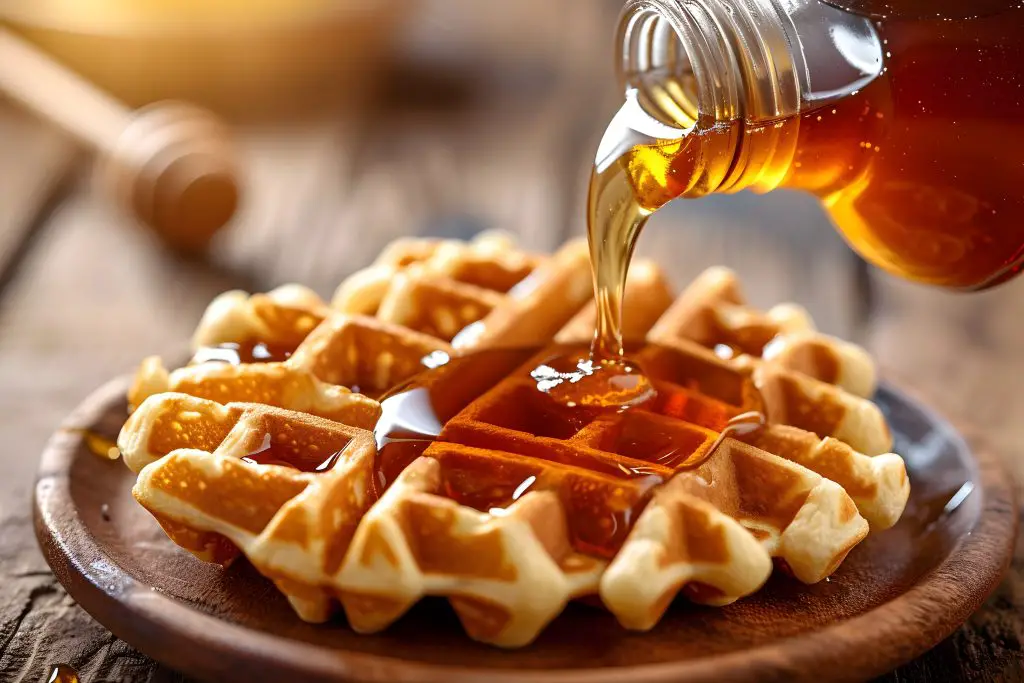
Freshly made pancakes straight off the griddle are a breakfast ritual that few can resist.
Once your stack is adorned with a generous slathering of butter, the next essential step is reaching for the maple syrup.
But as you reach across the table, you’re faced with a dilemma: do you grasp the bulky base of the bottle or wrestle with the absurdly small handle perched on its neck?
Let’s be real, that minuscule handle seems more like a design flaw waiting to trap your fingers than a practical feature. So why does it even exist?
Surprisingly, the origin of those petite handles on maple syrup bottles takes us on a journey through Canadian history.
“What was produced since the beginning of time by Indigenous people was maple sugar, because that kept more easily than the syrupy form,” says Jean-François Lozier, a curator at the Canadian Museum of History.
But soon after, maple syrup began to take over.

The late 19th century marked a turning point in the evolution of maple syrup consumption and production.
As maple syrup began to surpass maple sugar in popularity, early Canadian colonists adopted the Indigenous practice of its production on a larger scale.
With this shift, maple syrup found itself more commonly stored in tin cans, a packaging solution that offered greater efficiency in both storage and transportation.
Today, maple syrup finds its home in glass bottles for several reasons.
When it comes to preserving the quality of this delectable syrup, three factors are paramount: temperature, time, and air.
Storing maple syrup in the refrigerator in a completely airtight container is ideal.
The familiar glass bottles lining grocery store shelves fulfil this requirement, ensuring that the syrup maintains its flavour over time by preventing oxidation.
But also, these bottles showcase the syrup’s rich amber hue.
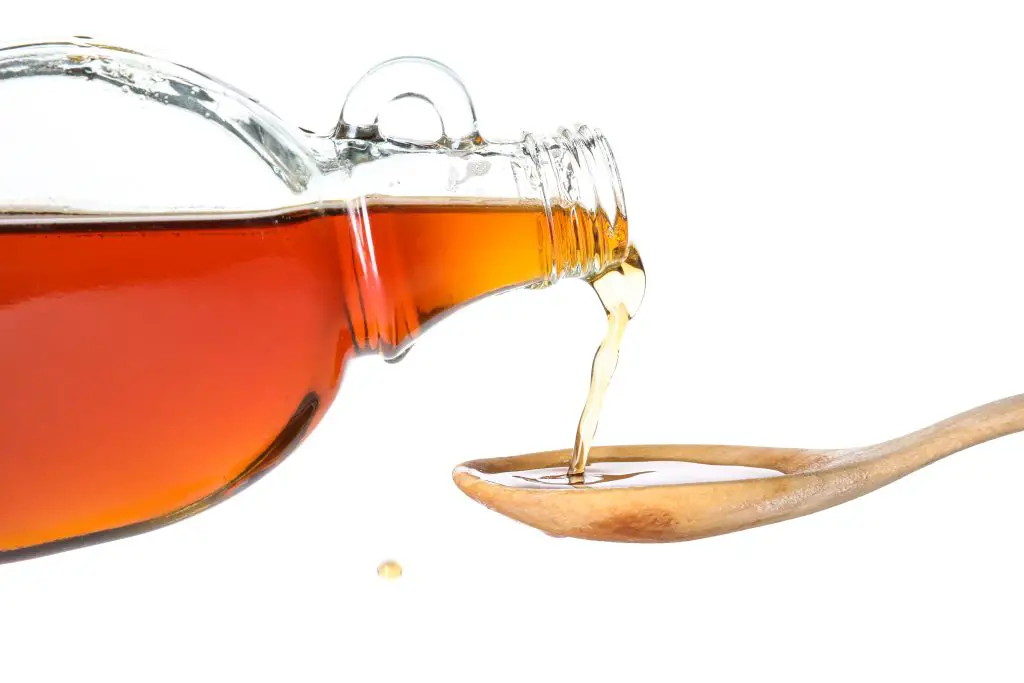
In the late 1800s, salt-glazed stoneware was the go-to storage solution, as famous as the Tupperware of its time.
While not commonly used for storing maple syrup, these sturdy, round ceramic jugs were used for a range of other liquids, from molasses to liquor.
Their large handles made them convenient to carry.
However, their popularity was short-lived as they gradually fell out of favor, overtaken by a more economical alternative: glass.
So what’s with the tiny handles on maple syrup bottles?
“Maple syrup companies weren’t so much retaining an old pattern of a jug as reinventing it and wanting to market their product as something nostalgic,” Lozier tells Reader’s Digest.
“They were tying in the image of maple syrup with their product and the image that people still had of those crocks in the 19th century.”

Basically, those tiny handles adorning maple syrup bottles aren’t just decorative quirks – they pay homage to the bygone era of the large ceramic jugs that once adorned Canadian homes.
Per IFL Science, via the Oxford Learners’ Dictionary, this type of design feature is called: “a skeuomorph, or a feature or design copied from another similar object, but which no longer has a practical purpose associated with the original design or object.”
It explains: “Other examples of skeuomorphs include the floppy disk symbol you use for saving documents, or the shutter noise played on digital and phone cameras when you take a photograph, which does not come from an actual shutter.”
Related Article: People Are Only Just Finding Out What Paprika Is Actually Made From
Related Article: People Are Only Just Realizing That Red Juice In Rare Steak Isn’t Blood
Want more stuff like this?
Get the best viral stories straight into your inbox!